

Table Of Contents
Importing Gold Into India

Gold is not an ordinary commodity in India.
It is savings, tradition, wedding security, and for thousands of businesses, raw material.
That is why the government controls it tightly.
India produces almost no gold of its own, so nearly every gram in an Indian jewellery shop arrived through an import channel that is licensed, taxed, and monitored at every step.
This guide walks you through that entire process, step by step, from checking your eligibility to taking delivery at your vault.
We run a trading company, so we have written it the way trade procedures actually unfold, not the way a textbook summarises them.
One housekeeping note before we begin.
All duty rates and policy conditions in this article are accurate as of June 2026, following the major rule changes of May 2026.
Gold policy in India moves fast, so always confirm the live tariff on the official ICEGATE portal before pricing any shipment.
First, The May 2026 Rule Changes You Cannot Ignore

Two announcements arrived within twenty-four hours of each other and reshaped the entire import landscape.
On 13 May 2026, the government raised the import duty on gold and silver from 6 per cent to 15 per cent, the steepest single increase on record.
The next day, the Directorate General of Foreign Trade, known as the DGFT, capped gold imports under the Advance Authorisation scheme at 100 kilograms per licence.
Until then, that route had no quantity limit.
The arithmetic behind both moves was simple.
India’s gold import bill crossed 71 billion US dollars in the financial year 2025-26, up around 24 per cent, and the government took steps to curb the foreign exchange drain.
Every step described below operates inside this new, tighter framework.
Step 1: Confirm You Are Eligible To Import Gold At All

Gold is a restricted import.
An ordinary Import Export Code does not entitle you to bring in bullion.
Only these categories can import gold commercially:
- Banks nominated by the Reserve Bank of India, which import bullion and sell it onward to the domestic market.
- Nominated agencies approved by the DGFT mainly select public sector undertakings and recognised trade bodies.
- Qualified jewellers through the India International Bullion Exchange at GIFT City in Gujarat, a direct exchange route that did not exist a few years ago.
- Jewellery exporters holding an Advance Authorisation licence, who may import gold duty-free strictly as raw material for export production.
- Individual travellers, within personal baggage limits covered later in this guide.
If your business falls into none of these categories, your most realistic option is to buy imported gold from a nominated bank or agency in India.
Trying to import directly without eligibility is not a grey area.
It is smuggling.
Step 2: Understand The Full Cost Before You Quote Anyone

Here is the duty stack on commercial gold imports as it stands today.
| Component | Rate |
|---|---|
| Basic Customs Duty | 10 per cent |
| Agriculture Infrastructure and Development Cess | 5 per cent |
| Integrated GST | 3 per cent |
| Effective total burden | Around 18.45 per cent |
The total exceeds a simple sum because IGST is charged on the value of the goods plus the customs duties already applied.
Tax on tax, in plain words.
Duty is only part of your landed cost.
International suppliers quote gold at the prevailing London Bullion Market Association price plus a premium, typically expressed in US dollars per ounce.
That premium covers refining, bar fabrication, and the seller’s margin, and it widens when demand is hot.
Your true landed cost is therefore the international price, plus the premium, plus freight and insurance, plus the full duty stack, converted at the exchange rate on the date of customs assessment.
Run that calculation before quoting any buyer.
Importers who budget for customs duty alone routinely face a working capital squeeze when the IGST demand lands at the time of clearance.
Step 3: Contract With An Accredited Supplier On Bankable Terms

Serious buyers source only from refineries accredited by the London Bullion Market Association, because LBMA bars clear Indian customs without purity disputes.
A purity dispute costs far more than the small discount offered by an unaccredited refinery.
Your contract should set out in writing five things: quantity, fineness, the premium over the LBMA price, the pricing date mechanism, and delivery terms.
Payment in bullion deals is rarely open credit.
Most transactions settle through an irrevocable letter of credit or full advance remittance through your authorised dealer bank.
The bank will ask for your eligibility documents before processing the remittance, so have your authorisation paperwork ready at this stage, not at the airport.
Step 4: Book Specialised Secure Logistics, Not General Freight
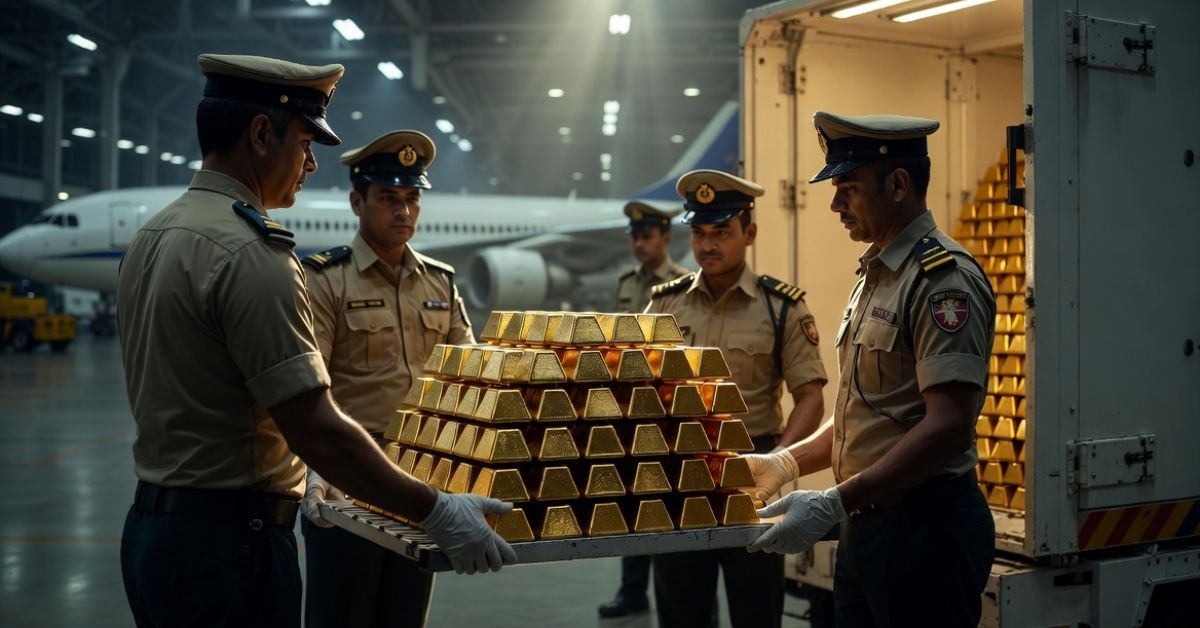
Gold moves by air under dedicated, valuable cargo handling.
This is a separate world from general freight, with armoured ground transfer, dual custody, and full transit insurance built in.
A general freight forwarder cannot legally or practically handle this consignment.
Use a specialised valuables logistics provider and confirm the insurance certificate covers door-to-door value, not just airport-to-airport.
Include the cost of secure storage in your timeline as well.
Valuable cargo sitting at an Indian airport strongroom accrues charges daily, and those charges are priced for bullion, not for cardboard boxes.
Every day, a consignment waits for a documentation gap to be resolved, costing real money.
Step 5: File The Bill Of Entry Correctly On ICEGATE

On arrival, your customs broker files the Bill of Entry on ICEGATE, the customs electronic portal.
Three details decide whether this step takes hours or weeks.
First, classification.
Gold products sit under Chapter 71 of the customs tariff, and individual entries get adjusted by notification from time to time.
An incorrect tariff line results in an incorrect duty calculation and an automatic query.
Second, valuation.
Declare the true transaction value.
Customs risk-assessment systems flag invoices that are below prevailing international prices, and an undervalued gold consignment is seized rather than negotiated.
Third, documentation match.
The invoice, packing list, airway bill, and refinery certificate must agree on bar count, serial numbers, and weight to the gram.
One mismatched serial number stalls the entire clearance.
Step 6: Clear Customs Examination And Pay The Duty
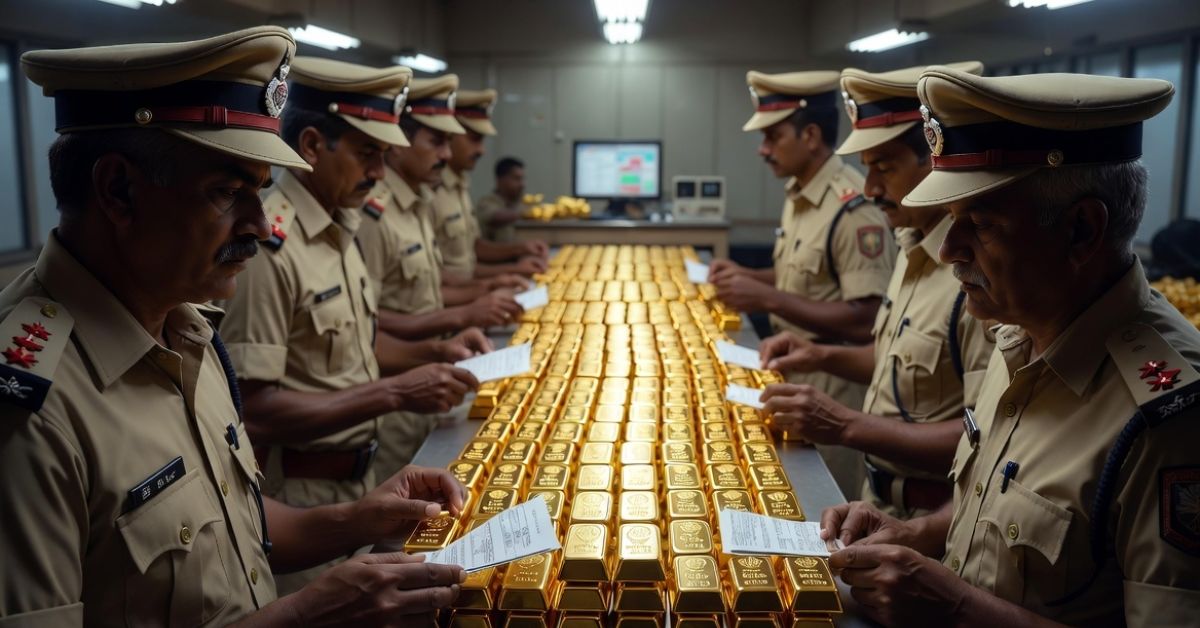
Customs physically verifies the consignment against the documents.
Officers check purity markings, bar serial numbers, and the refinery certificate.
LBMA-accredited bars pass this stage smoothly, which is the practical payoff of Step 3.
Once the assessment is finalised, you pay the full duty amount and IGST electronically.
Only then does the consignment release for armoured transfer to your vault or processing unit.
Step 7: Maintain The Compliance Trail After Delivery

The job does not end at the vault.
Preserve records of every import, every onward sale, and, for exporters, every shipment of finished goods.
GST returns must reconcile with your import volumes.
For Advance Authorisation holders, this trail is now examined more aggressively than at any point in the scheme’s history, which brings us to the rules that changed everything.
The New Advance Authorisation Rules, Decoded
The Advance Authorisation scheme lets a jewellery exporter import gold without paying duty, provided the gold is converted into jewellery and exported within the prescribed period.
With duty at 15 per cent, the scheme is now extremely valuable, which is exactly why the government feared it would be exploited for price arbitrage and tightened it within a day of the duty hike.
| New Rule | What It Means In Practice |
|---|---|
| 100 kg cap per licence | No single authorisation covers more than 100 kilograms |
| 50 per cent export obligation rule | Half the committed exports under one licence must be completed before the next licence is issued |
| Fortnightly performance reports | Reports certified by an independent chartered accountant must detail imports and exports every two weeks |
| Physical inspection of first-time applicants | Regional authorities physically verify new applicants before granting a licence |
The signal from the DGFT is unmistakable.
The duty-free window stays open for genuine exporters, while speculative players are filtered out by paperwork.
If you plan to use this route, treat the compliance calendar as seriously as the production calendar, and budget for the chartered accountant certification as a recurring cost.
A missed fortnightly report can freeze your next licence and, with it, your raw material pipeline.
Bringing Gold As A Traveller: The Personal Rules
Lakhs of Indians bring gold home in their baggage every year under a separate set of rules.
An Indian passenger returning after more than one year abroad can bring gold jewellery duty-free, up to 20 grams, capped at 50,000 rupees for a male passenger, and up to 40 grams, capped at 100,000 rupees for a female passenger.
Beyond the duty-free allowance, a passenger of Indian origin who has stayed abroad for over six months can bring up to 1 kilogram of gold by paying the applicable duty in convertible foreign currency.
Three points trip travellers up repeatedly.
The duty-free allowance covers jewellery only, so bars and coins attract duty from the first gram.
Anything beyond your allowance must be declared at the red channel, because undeclared gold found later is treated as smuggling, not as an oversight.
Moreover, these limits are revised periodically, so check the current baggage rules before you fly, especially after a policy-heavy year like this one.
Your Pre-Shipment Document Checklist
Assemble this file before the shipment leaves the origin country, because fixing a gap while bullion sits in airport secured storage is the most expensive paperwork lesson in this trade.
| Document | Purpose |
|---|---|
| Import Export Code | Basic eligibility to import into India |
| Category authorisation | RBI nomination, DGFT approval, IIBX membership, or Advance Authorisation |
| Commercial invoice | Declares the true transaction value |
| Packing list | Bar count, serial numbers, gross and net weight |
| Refinery purity certificate | Confirms fineness from an LBMA-accredited refinery |
| Airway bill | Transport document for the consignment |
| Insurance certificate | Door-to-door transit coverage |
| Bill of Entry | The customs declaration filed on ICEGATE |
| GST registration | Required for IGST credit and onward sale |
A Little Gold Trivia For You
For all the hundreds of tonnes India imports every year, the country mines barely one to two tonnes of gold annually, most of it from the Hutti gold mines in Karnataka, one of the world’s oldest working gold mines, with a history stretching back to ancient times.
In other words, domestic production covers less than half of one per cent of what India consumes.
Every wedding season in India is, quite literally, powered by imports.
Final Thoughts From THOUSIF EXIM
Importing gold into India is achievable, but it is a discipline, not a transaction.
The process rewards businesses that verify eligibility first, document everything, and track policy changes as closely as they track the gold price.
The May 2026 changes raised both the cost of entry and the compliance bar.
In trade, that usually means the serious players consolidate, and the shortcuts disappear, which is good news for anyone building a genuine long-term business.
The THOUSIF EXIM blog team writes every guide in the same simple, practical style, and we would be glad to have you read along.
About Author