
Table Of Contents
Import From Australia To India
Most guides on Australia–India trade are written for Australians who want to sell.
This one is written for you, the Indian importer who wants to buy well, clear customs cleanly, and sell on at a healthy margin.
We run a trading house, so we will not just repeat headline numbers.
We will tell you the Indian side of the story, the part that decides whether a deal makes money or quietly loses it.
These are the eleven products that define the Australia-to-India route.
We have ordered them by how realistic they are to start with.
The first six are well-suited to a small- or mid-sized importer.
The last five are the giant commodity trades that hold the corridor together, and we cover them honestly.
Hence, you understand the full picture without pretending they are easy entry points.
Good trade knowledge should never feel like a puzzle.
First, The Rules That Apply To Everything
Before any single product, three things are true for every import on this list.
You need an Importer-Exporter Code (IEC) from the Directorate General of Foreign Trade.
It is a one-time registration, and without it, nothing moves.
You need to claim the trade agreement benefit correctly.
The Australia-India Economic Cooperation and Trade Agreement, known as ECTA, came into force in December 2022 and cut import duty on a large share of Australian goods.
The lower duty only applies if your shipment carries a valid Certificate of Origin proving the goods are genuinely Australian.
Lose that paper, and you pay the full rate.
You also pay more than basic customs duty.
On most imports, you pay Basic Customs Duty, then a surcharge on that duty, then Integrated GST, and sometimes a cess. ECTA mainly reduces the Basic Customs Duty.
The other charges still apply. We will show you exactly how this stacks up later in the article.
1. Almonds
Almonds are one of the friendliest starting points for a new importer.
India has an enormous and growing appetite for them, in sweets, snacks, festival hampers, and daily diets.
Domestic supply cannot meet that demand, so imported almonds always find a buyer.
Australia is a strong almond grower, and ECTA gave Australian almonds a 50 per cent cut in the in-quota tariff.
That makes them more competitive than they used to be.
The Indian side points to the matter that matters most here: food safety.
Almonds are a food product, so you need an FSSAI import licence, and every consignment must clear FSSAI inspection at the port.
Build that time and cost into your plan, and make sure your labelling is compliant before the goods arrive.
2. Pulses And Lentils
If almonds are friendly, pulses are tempting, but they come with a catch worth understanding.
India is the largest consumer of pulses in the world.
Dal is a daily staple, and local harvests often fall short.
Australia grows large volumes of lentils and chickpeas, which makes it a natural supplier.
Here is the catch. Pulses are politically sensitive in India because they affect both farmers’ incomes and household budgets, so duties and policies can change at short notice.
ECTA gave Australia a reduced-rate quota of 150,000 tonnes of lentils per year.
India had also allowed a duty-free window, but that ended in March 2025.
Since then, the standard tariff on lentils has remained near 10 per cent, while shipments under the ECTA quota pay a lower 5 per cent tariff.
Our standing advice to anyone trading pulses is simple.
Never price a deal on last season’s duty.
Confirm the live rate and the quota position for your shipping date, as the ground rate shifts quickly in this category.
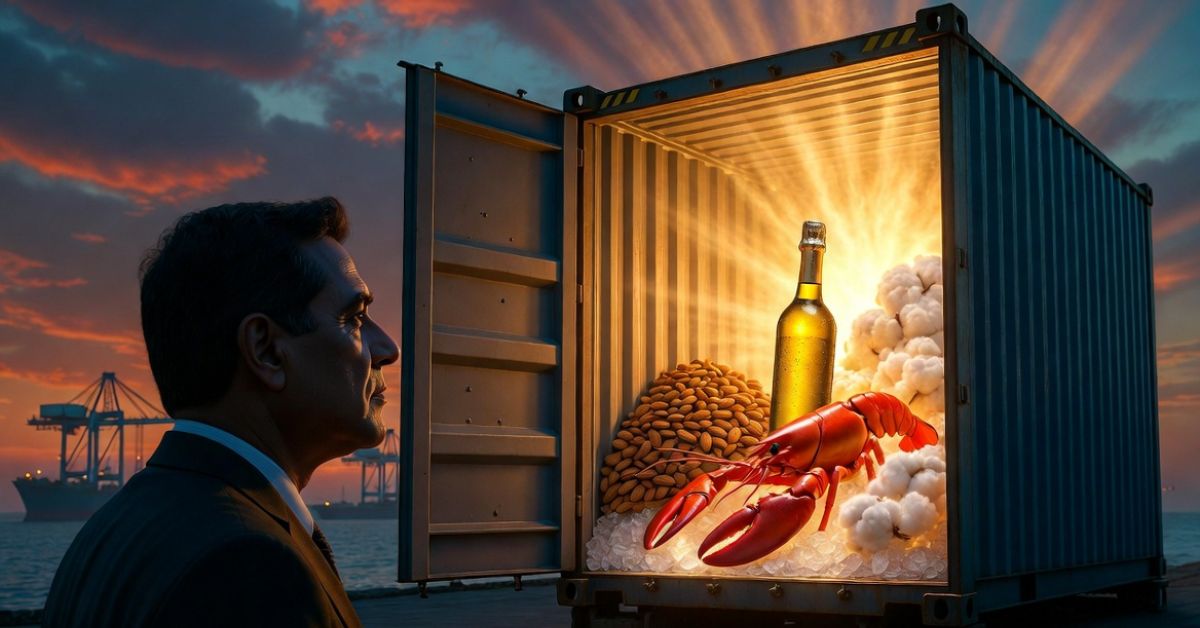
3. Wine
Wine is a genuine opportunity, but it is the most heavily regulated item on this list, so go in with your eyes open.
India used to charge a punishing tariff on imported wine, as high as 150 per cent.
ECTA set out a phased path to bring that down sharply over several years, with the higher-value bottles heading towards a far lower rate.
The real complication is not the customs duty.
It is the states. Alcohol in India is regulated at the state level, which means separate licensing, label registration, and excise rules vary by state.
A licence that works in one state does not automatically work in another.
So treat wine as a product where the paperwork is the actual business.
The importers who win here are the ones who master state licensing first and worry about the wine list second.
4. Rock Lobster And Premium Seafood
Seafood is one of the freshest stories under the trade deal, in every sense.
ECTA removed the 30 per cent tariff on fresh rock lobster straight away and put most other seafood on a path to lower duties.
Soon after the deal began, Australia sent its first-ever shipments of fresh lobster and salmon to India.
The buyers are India’s hotels, fine-dining restaurants, and premium retail, especially in the larger cities.
Rock lobster in particular carries a luxury image that suits that market.
The Indian side challenge is the cold chain.
Fresh seafood is unforgiving.
You need reliable temperature-controlled handling from the airport onward, FSSAI clearance, and a confirmed buyer before the goods land.
Done well, the margins are excellent. Done carelessly, the losses are total.
5. Wool
Wool is a steady, unglamorous, dependable trade, which is exactly why we like it.
Australia is one of the largest wool producers in the world, and its fine merino wool is prized by mills everywhere.
India has a busy textile and apparel industry that uses Australian wool as a raw input. ECTA removed the tariff on wool immediately.
This is an industrial sale, not a consumer one.
Your customers are spinning and textile units, and they care most about consistent quality and grading.
For a trader, wool rewards patience and relationships rather than quick flips.
Land a reliable mill as a repeat buyer, and you have a quiet, durable line of business.
6. Cotton
Cotton sits right beside wool, feeding the same enormous textile sector.
India grows plenty of cotton, but demand for certain grades still outpaces local supply, creating an opening for imports.
ECTA gave Australia a duty-free quota for cotton, lowering the cost of importing it.
The practical appeal is that cotton and wool serve overlapping customers.
If you already supply textile mills, adding the other fibre is a natural extension rather than a fresh start.
As with all raw materials, your edge is reliability. Mills plan production around a supply they can trust.
The Five Heavyweight Trades
The next five products are the largest contributors to this route in terms of value.
They are the reason the trade numbers are so large, and they are worth knowing well.
They belong to large, well-funded players with serious shipping and contract muscle, so we will cover them together and honestly.
7. Gold
Gold is woven into Indian life, from weddings and festivals to long-term savings, and Australia is the world’s second-largest gold producer.
The reason it is not a casual trade is the regulation.
Gold imports into India are tightly controlled and generally routed through nominated banks and authorised agencies, with strict licensing and substantial capital backing.
8. Coal
Coal is the largest single product Australia sends to India.
India is a major steel producer, and steelmaking needs coking coal, also called metallurgical coal, while thermal coal feeds power generation. ECTA removed the tariff immediately.
This is a high-volume game built on long-term contracts.
9. Gas
Liquefied natural gas, or LNG, ties into India’s shift towards cleaner energy.
Australia is one of the top three LNG exporters in the world, and LNG entered India duty-free under ECTA.
The demand is long-term and strategic, but the trade is infrastructure-heavy.
10. Copper
Copper and critical minerals feed India’s growth in manufacturing, electric vehicles, and renewable energy.
Australia supplies copper along with minerals such as manganese, zirconium, and titanium dioxide, many of which entered India duty-free.
Both governments now treat these as strategic, which supports steady demand.
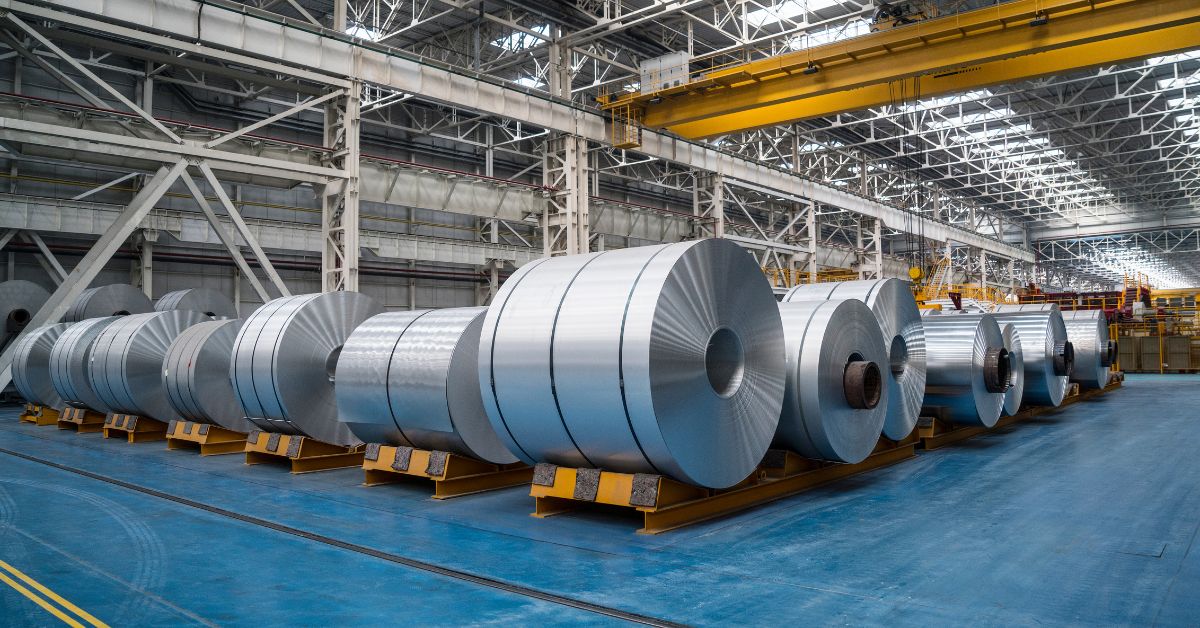
11. Aluminium
Aluminium and alumina round out the group.
Aluminium is everywhere in construction, packaging, transport, and electronics, and India’s expanding industry needs a steady supply.
Australia is a major producer of both, and alumina gained from the immediate removal of tariffs under ECTA.
The lesson is not that these are out of bounds forever. It is the reward scale. Most traders should master a product from the first six before looking this way.
A Worked Example: What Landed Cost Really Means
The most common mistake we see is treating the supplier’s price as the cost.
It is only the starting point.
Here is a simple illustration using sample figures to show how the charges stack up.
Imagine you buy almonds worth 10,00,000 rupees, with that figure already including cost, insurance, and freight to the Indian port.
The numbers below use assumed rates for teaching only, so always confirm the live rates for your goods.
| Item | Sample Rate | Amount (Rupees) |
|---|---|---|
| Goods value at port (cost, insurance, freight) | – | 10,00,000 |
| Basic Customs Duty after ECTA reduction | 30 per cent | 3,00,000 |
| Surcharge on the duty | 10 per cent of duty | 30,000 |
| Value used for GST | – | 13,30,000 |
| Integrated GST | 12 per cent | 1,59,600 |
| Clearing, transport, and finance | – | 40,000 |
| Approximate landed cost | – | 15,29,600 |
A 10,00,000 rupee order has become roughly 15,30,000 rupees on the ground.
That is about half as much again on top of the supplier price.
One important nuance softens this.
If you are registered for GST, the Integrated GST you pay on imports is usually available back to you as input tax credit.
So GST is mainly a cash-flow cost rather than a final one.
Your true cost burden is the duty, the surcharge, and your logistics.
Price your sales with the full landed cost in mind, and treat the recoverable GST separately.
Matching Products To Indian Ports
A small point of practical knowledge saves a lot of trouble.
Different goods suit different ports.
Containerised goods such as packaged almonds, wine, and baled wool and cotton move well through major container ports, including Jawaharlal Nehru Port near Mumbai (often called Nhava Sheva) and Mundra in Gujarat.
Fresh and perishable goods like rock lobster and other seafood usually travel by air via cargo terminals at major airports in Mumbai, Delhi, Chennai, or Bengaluru, where cold-chain handling is available.
Bulk commodities like coal move through dedicated bulk terminals on the east and west coasts rather than container ports.
Choosing the right gateway affects your freight costs, clearance speed, and cold chain risk, so decide early rather than late.
A Quick Trivia Break
Did you know? India grows more pulses than any other country on earth, and yet it is also the world’s largest importer of them. Demand from over a billion people outpaces even a record harvest. That single fact explains why lentils from countries like Australia continue to arrive at Indian ports, season after season.
How To Begin
If one of the first six products fits your business, here is how we would guide a new client in getting started.
Get your IEC first, and your FSSAI licence too if you are importing food. Deals move faster than registrations, so have the paperwork ready before you approach a supplier.
Insist on a valid Certificate of Origin for every shipment.
It is the document that unlocks your ECTA duty saving, and a missing one quietly erases your margin.
Calculate your full landed cost as shown above, then price your sales from that figure, not from the supplier quote.
Verify the live duty on your shipping date, especially for sensitive goods like pulses, where policy can change between order and arrival.
Finally, start small.
One clean, modest first shipment will teach you more about a product and a port than months of theory ever could.
Final Thoughts
The Australia-to-India route is one of the most rewarding trade stories today, and ECTA has made it far more open than it was just a few years ago.
The skill is to be honest about where you fit.
The accessible products at the top of this list are where a focused trader can genuinely build something, while the heavyweight trades show where the route is heading.
We hope this gave you a clear and practical map from an importer’s perspective, with the real costs and rules laid out plainly rather than glossed over.
If it was useful, do explore more of our articles on trade corridors, customs practicalities, and the everyday craft of doing business beyond borders.
There is always another route worth learning, and we would be glad to walk it with you.
About Author