
Table Of Contents
In the spring of 2026, Japan stopped accepting fresh mangoes from India.
There was no trade war.
There was no tariff dispute.
There was no complaint about taste or quality from a single Japanese consumer.
There was one inspection, at one facility, on one day in March.
The inspectors were not satisfied with what they saw.
Within weeks, a market India had spent twenty years cultivating was closed for the season.
I run THOUSIF EXIM, a trading company that moves goods across borders, and I study episodes like this the way pilots study incident reports.
Not for the drama, but for the lesson.
Because what happened to Indian mangoes in Japan can happen to any exporter, in any product category, in any market.
I know this because versions of it have happened to me.
This is the full story, told, and what it teaches.
What Exactly Happened In March 2026
Japan does not take any country’s word that its produce is pest-free.
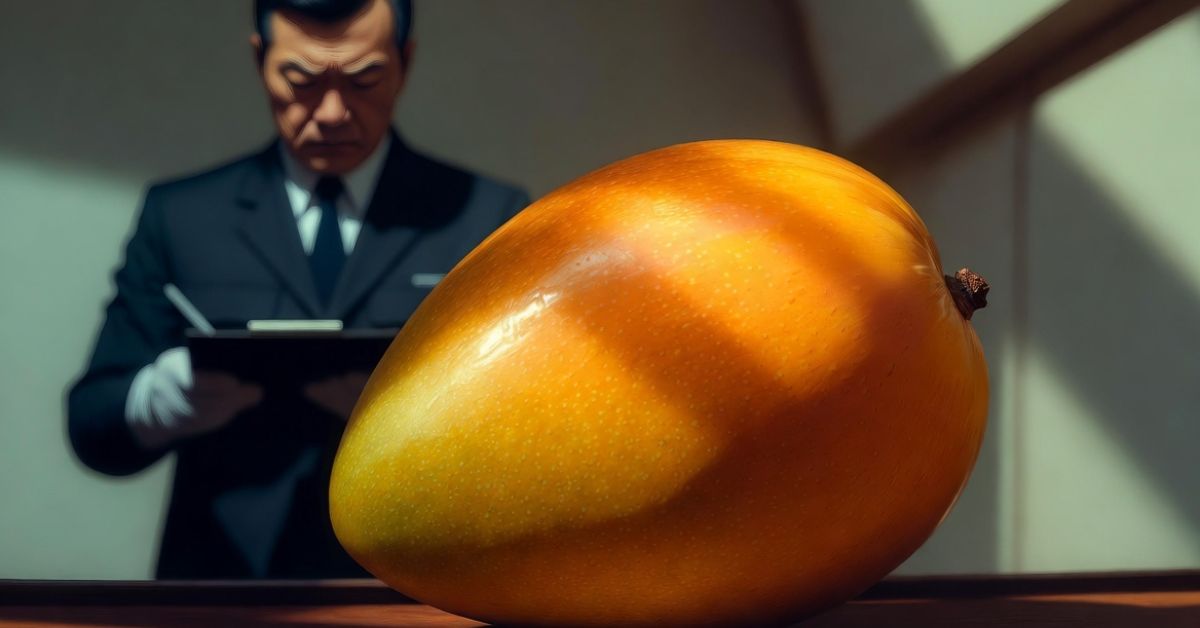
Before every export season, Japanese quarantine officers travel to India and physically inspect the treatment facilities that prepare mangoes for shipment.
In March 2026, inspectors visited a Vapour Heat Treatment facility in Rehmanpur, Uttar Pradesh.
They found gaps in the fumigation and disinfection procedures at the site.
The response was swift.
On 31 March, the Yokohama Plant Protection Association issued a formal notice.
Any mango consignment carrying an Indian inspection certificate issued on or after 25 March 2026 would be rejected at Japanese ports.
The timing was brutal.
The peak window for Indian mango exports to Japan runs from April to June.
The notice landed days before that window opened, which meant the season was over before it began.
The president of the Mango Growers Association of India in Malihabad summed it up plainly.
The Japanese inspection team had come, and they were not satisfied.
One important clarification.
Indian officials have pushed back against the word “ban”.
Japan has not blocked India.
It has issued a warning and suspended acceptance until standards improve.
The distinction matters, and we will return to it.
Understanding Vapour Heat Treatment
To understand why one inspection could shut down an entire trade channel, you need to know Vapour Heat Treatment, usually abbreviated as VHT.
VHT is a non-chemical quarantine process.
Mangoes are placed in a sealed chamber and exposed to hot, saturated, humid air at precisely controlled temperatures.
The heat penetrates the fruit, killing fruit fly eggs and larvae hiding inside without cooking the mango or leaving any chemical residue.
Japan is an island nation with a protected agricultural ecosystem.
A single invasive fruit fly species establishing itself could devastate Japanese orchards.
So Japan maintains a zero-tolerance policy on such pests.
There is one more layer that makes this protocol unusually strict.
Japan requires the treatment to be carried out under the direct physical supervision of Japanese quarantine inspectors stationed at the Indian facility.
Indian self-certification is not enough.
Japanese eyes must watch the process happen.
This is why the arrangement is so unforgiving.
When inspectors find lapses, they are not flagging one bad batch of fruit.
They are questioning the foundation of the agreement itself.
The Strict Rules Japan Sets For Indian Mangoes
The Japan protocol is one of the narrowest market-access agreements in the Indian fruit trade.
It is worth seeing the conditions side by side.
| Requirement | Detail |
|---|---|
| Permitted varieties | Alphonso, Kesar, Banganapalli, Langra, Chausa, Malika only |
| Permitted source states | Andhra Pradesh, Maharashtra, Gujarat, Uttar Pradesh, West Bengal |
| Mandatory treatment | Vapour Heat Treatment at an approved facility |
| Supervision | Japanese quarantine inspectors are physically present |
| Inspection cycle | Facility audit before every export season |
| Tolerance for deviation | Zero, with automatic rejection |
Any mango outside these varieties, any fruit from an unapproved state, and any consignment treated without supervision is automatically rejected.
There is no appeals process at the port.
There is also a hidden deadline buried in this protocol, according to industry reporting on the agreement.
Because Japanese inspectors must be physically present during treatment, India must request their deputation months in advance.
If that request is not initiated well before the season, the April-to-June window can close by default the following year.
Process discipline, not mango quality, decides who gets to sell.
Why A Tiny Market Carries Enormous Weight
Here is where most coverage of this story emphasizes the wrong place.
The commentary fixates on how small the Japanese market is.
I think the size is the least interesting thing about it.
Japan operates the strictest agricultural import regime in the world.
An Indian exporter who clears Japanese inspection holds a credential that opens conversations in South Korea, Australia, and every other demanding market on earth.
Buyers in those countries know exactly what Japanese approval costs.
Japanese consumers also pay accordingly.
Premium fruit occupies a special place in Japanese culture, and imported mangoes that meet the standard command prices that Indian farmers cannot match elsewhere.
Gujarat’s Kesar variety accounted for the largest share of shipments to Japan, and growers in that channel earned margins built on two decades of demonstrated compliance.
Now the twist.
All of that prestige rests on a market worth only around 1.54 million US dollars a year.
India exported roughly 29,938 tonnes of fresh mangoes worldwide in the 2024-25 financial year, worth about 56.5 million US dollars, with the UAE, the United States, the United Kingdom, Kuwait, and Qatar as the largest buyers. Japan represents less than three percent of the total.
That is the real story.
India did not lose three percent of its mango revenue.
It lost its most valuable quality certificate, and every competing exporting nation noticed.
A Brutal Season Made Worse
The suspension landed on an industry already under pressure from three separate directions.
Heatwave conditions damaged the Alphonso crop in Maharashtra’s Konkan region.
India’s most famous variety entered the season with reduced volumes before a single crate was packed.
The conflict in West Asia disrupted shipping lanes.
Freight costs rose, containers became scarce, and transit times stretched for cargo that cannot afford to wait.
Then a separate problem emerged on a different border.
Nepal restricted Indian mangoes and other fruits after its inspectors reported high pesticide levels.
It is important to be precise here because headlines have lumped the two events together.
Japan’s issue is about the quarantine process at a treatment facility.
Nepal’s issue concerns chemical residues on the fruit itself.
They are different failure modes with different fixes.
What they share is timing, and two restrictions in one season create a narrative that Indian exporters will spend real effort dismantling.
The View From My Trading Desk
Most coverage of this story ends with the diplomacy.
I want to show you what market disruption looks like from the chair of a trading company, because this is the part the newspapers never print, and it is the part I have lived through.
At THOUSIF EXIM, I have had goods in motion when the rules changed mid-pipeline.
It is a feeling every trader eventually learns.
The goods do not pause politely while you read the notification.
Consignments already certified are racing the clock.
Orders booked for processing are suddenly homeless.
You are holding committed inventory, prepaid logistics, and a buyer agreement, all pointed at a door that has just narrowed or closed.
My first calls in those moments were never to a government office.
They were to alternative buyers.
Can another market absorb the volume? Can an existing buyer take an extra consignment at a workable price? Every alternative pays less than the original plan, so each redirected shipment locks in a loss against the season.
You are not choosing between profit and more profit.
You are choosing the smallest available loss, quickly, before the goods choose for you.
Then comes the harder conversation, with the original buyer.
I have learnt that relationships in premium markets are built over years and lost in one season of silence.
The exporters who survive a disruption are the ones on the phone within days, explaining the situation honestly, sharing the recovery plan, and protecting the relationship for the reopening.
Silence is what actually kills the channel, not the disruption itself.
Those experiences are why I now obsess over two unglamorous things in my own operations.
The first is process documentation that can survive a surprise audit on its worst day, because an inspector never visits your facility on its best day.
The second is buyer diversification, because the traders absorbing the Japan shock right now are the ones whose order books never depended on one door staying open.
I structure THOUSIF EXIM around exactly these two principles, and episodes like this mango suspension are the reason why.
What Happens Next
The recovery path is clear and already in motion.
APEDA, the government body responsible for agricultural exports, and the Plant Quarantine Department have jointly mobilised to address all the conditions Japan has raised.
Industry representatives are working to arrange a reinspection of the Rehmanpur facility to demonstrate corrected procedures and invite Japanese officials to verify them.
History suggests this is winnable. Japan first restricted Indian mangoes in 1986 over fruit fly concerns, and that closure lasted two decades.
India regained access in 2006 only after extensive negotiation and heavy investment in treatment infrastructure and pest surveillance, with the VHT system at the centre of the reopening, according to the widely reported account of that agreement.
That history carries a painful irony.
The system India built to win Japan back is the system that failed inspection in 2026.
The safeguard became the weak point.
However, it also carries the encouraging precedent.
India has solved this exact problem before, and on the second attempt, the infrastructure is already in place.
The realistic best case is a corrected facility, a successful reinspection, and restored certification in time for the next season.
The realistic worst-case scenario is Japan treating the lapse as systemic rather than local, which would mean a wider review and a longer road ahead.
Either way, the outcome will be decided by the quality of India’s remediation, not by negotiation tactics.
Trivia
Japan’s obsession with premium fruit is not a quirk of customs policy. It is a deep cultural institution. Luxury fruit is a traditional gift in Japan, sold in dedicated boutiques, and a single pair of top-grade Japanese Miyazaki mangoes has fetched hundreds of thousands of yen at season-opening auctions. When Indian mangoes clear Japanese quarantine, they are entering one of the most demanding and most rewarding fruit markets on the planet.
The Sweet Road Back
Strip away the headlines, and this story has one message for anyone who trades across borders.
The product is rarely the problem.
The process almost always is.
A mango that fails inspection is worthless, no matter how sweet it is.
A facility that slips on a slow day can suspend twenty years of market access in one visit.
The exporters who win in premium markets are not the ones with the best fruit.
They are the ones whose systems hold up when an inspector arrives on the wrong day.
India’s mangoes will return to Japan.
The demand is real, the infrastructure exists, and the playbook was written in 2006.
What stands between now and then is the unglamorous work of fixing procedures, documenting them, and inviting scrutiny.
I hope this breakdown helped you see the full picture behind the headlines.
If you found it useful, you will enjoy our other deep dives on export compliance, food product certification, Gulf trade corridors, and the practical mechanics of moving goods across borders, all written in the same simple, practical style.
Explore more on our website.
We would love to have you back.
About Author