
Table Of Contents
Most lists of products to export to Dubai are ranked by trade statistics. That ranking flatters the data and fails the reader.
Gems and jewellery top every such list because they dominate export value. A first-time exporter cannot enter that category. So the typical guide opens by describing a door the reader cannot walk through.
This list is ranked differently. It is ordered by how realistically a small or mid-sized Indian exporter can actually enter each category in 2026, from most accessible to hardest. Every product carries a plain “who this is for” line so you know within ten seconds whether to read on or skip ahead.
One disclosure before we start. We run THOUSIF EXIM, and we trade natural food products and sports equipment with Gulf buyers ourselves. Two categories on this list are ones we operate in directly, and I will tell you exactly what that experience taught us, including the unglamorous parts.
Why 2026 Is A Genuine Window, Not Marketing Talk

Three facts, then we move on.
India and the UAE crossed 101 billion dollars in bilateral trade in 2025-26, the second consecutive year above the 100 billion mark. The India-UAE CEPA agreement completed four years in May 2026, and under it the UAE removed duties on 97 percent of its tariff lines for Indian goods. Moreover, Bharat Mart, a 2.7 million square feet Indian trade hub in Jebel Ali Free Zone, is set to open by the end of 2026.
Here is what the duty number means in money, because statistics do not pay invoices.
The UAE standard import duty on most goods is 5 percent. Take a consignment of packaged spices worth 20 lakh rupees landed. Without CEPA, roughly 1 lakh rupees goes to duty. With a valid Certificate of Origin under CEPA, that duty drops to zero on eligible lines. That 1 lakh is either pure margin recovered or a 5 percent price advantage over any competitor who did not file the paperwork. Over 240,000 Certificates of Origin have been issued since 2022. The exporters not filing them are simply working for free part-time.
Now the list, easiest first.
1. Spices And Spice Blends
Who this is for: first-time exporters, food businesses, anyone with access to quality sourcing.
Whole spices sell steadily, but the margin lives in value-added formats. Curry powders, biryani masalas, pickles, chutneys, and pastes earn multiples of what loose turmeric in gunny bags earns, and the UAE’s 3.5 million-strong Indian community buys them out of habit, not novelty.
GI-tagged spices deserve priority. A GI-tagged turmeric or a Malabar pepper carries a story that a commodity spice cannot, and Dubai retail buyers increasingly pay for that story.
Entry requirements are manageable: FSSAI licence, English and Arabic labelling, shelf-life documentation, and Halal certification where applicable. The compliance is paperwork-heavy but not capital-heavy, which is exactly what a first exporter needs.
2. Superfoods: Moringa, Makhana, And Millets
Who this is for: food brands willing to invest in packaging and certification before revenue.
This is our own category, so let me tell you what the guides do not.
When we built our moringa powder line, the product itself was the easy part. India grows the best moringa in the world. What consumed months was everything around the powder: securing the FSSAI licence, filing the trademark, getting retail packaging right for a 50-gram consumer pack, and then fighting through marketplace listing approvals. Amazon rejected our first listing attempt on a technicality and cleared it only after we submitted photographs of the physical product. Brand name approval required its own application and its own wait.
None of that appears in export guides, and all of it is the actual business.
The lesson transfers directly to Dubai. Gulf supermarket chains and online grocers do not buy powder. They buy certified, lab-tested, retail-ready, honestly labelled brands. If you enter this category, budget more time and money for compliance and packaging than for the product itself, and you will be ahead of ninety percent of hopefuls.
Demand is real and growing. The UAE consumer base is young, health-conscious, and willing to pay for clean-label products. Moringa, fox nuts, millets, and cold-pressed oils sit exactly where Indian supply strength meets Gulf wellness spending.
3. Basmati Rice And Staple Grains
Who this is for: traders with working capital and sourcing discipline, not brand builders.
The UAE imports the overwhelming majority of its food, and basmati is a category India dominates almost without competition. Volumes are enormous and steady.
The insight that matters: Gulf importers drop suppliers over one inconsistent lot faster than over a 5 percent price difference. The money is in grading consistency, not price cutting. If your sourcing cannot guarantee lot-to-lot uniformity, fix that before quoting anyone.
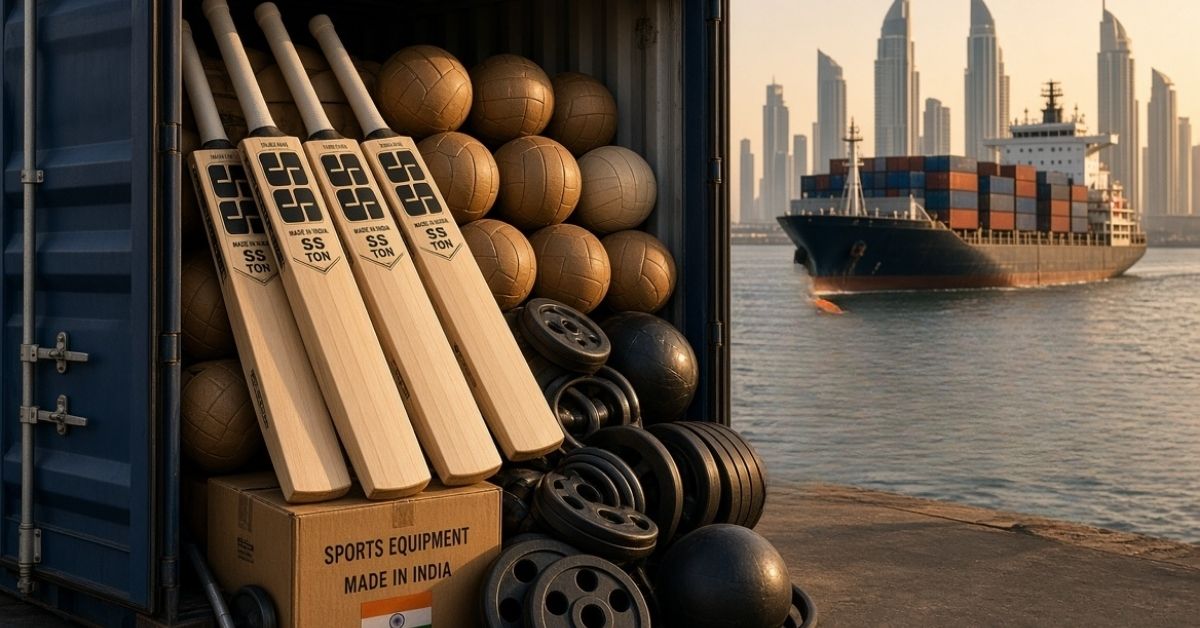
4. Sports Equipment And Fitness Goods
Who this is for: traders and manufacturers who want a demand-rich category with thin competition in the conversation.
We trade this category ourselves, and here is the honest observation: almost no export guide to Dubai mentions it, which tells you how little organized attention it receives relative to demand.
The demand side is strong and compounding. Cricket is effectively a second national sport among UAE residents, and the country hosts international fixtures year-round. Padel courts are multiplying across Dubai faster than operators can staff them. Gym culture, running clubs, and school sports programmes all procure continuously.
India manufactures world-class equipment, from cricket gear in Meerut and Jalandhar to yoga products, fitness accessories, and gym consumables. Institutional buyers such as schools, academies, and clubs value reliable resupply over rock-bottom pricing, which suits Indian exporters well.
Fewer competitors discussing a category usually means fewer competitors in the tender.
5. Handicrafts, Furniture, And Home Decor
Who this is for: exporters with artisan sourcing networks and patience for longer sales cycles.
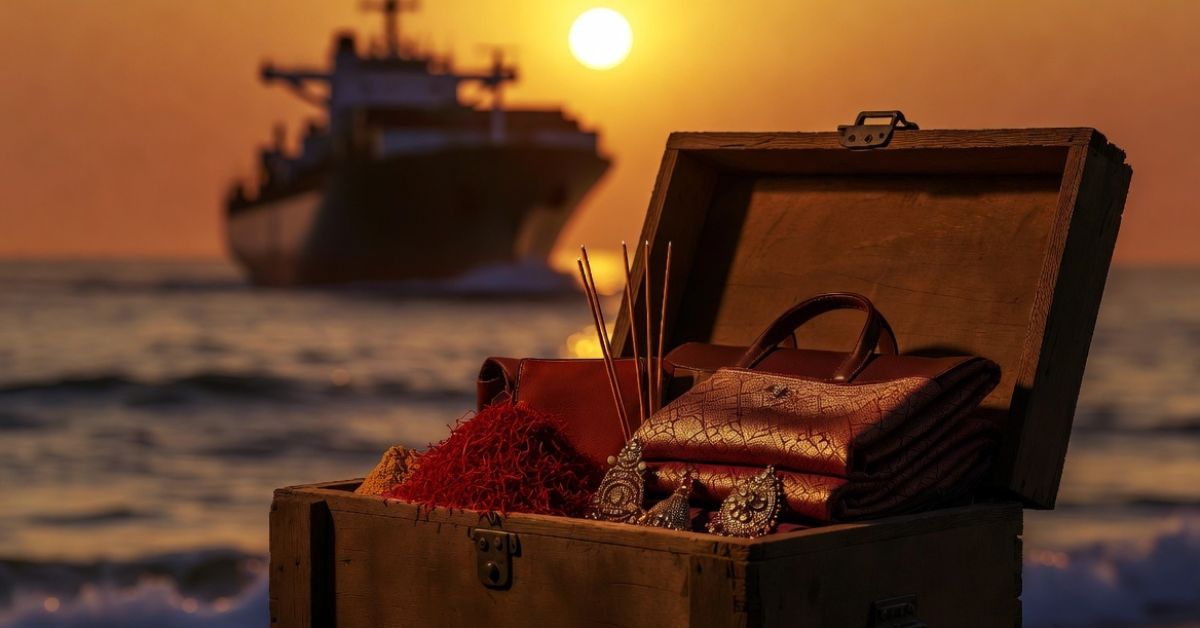
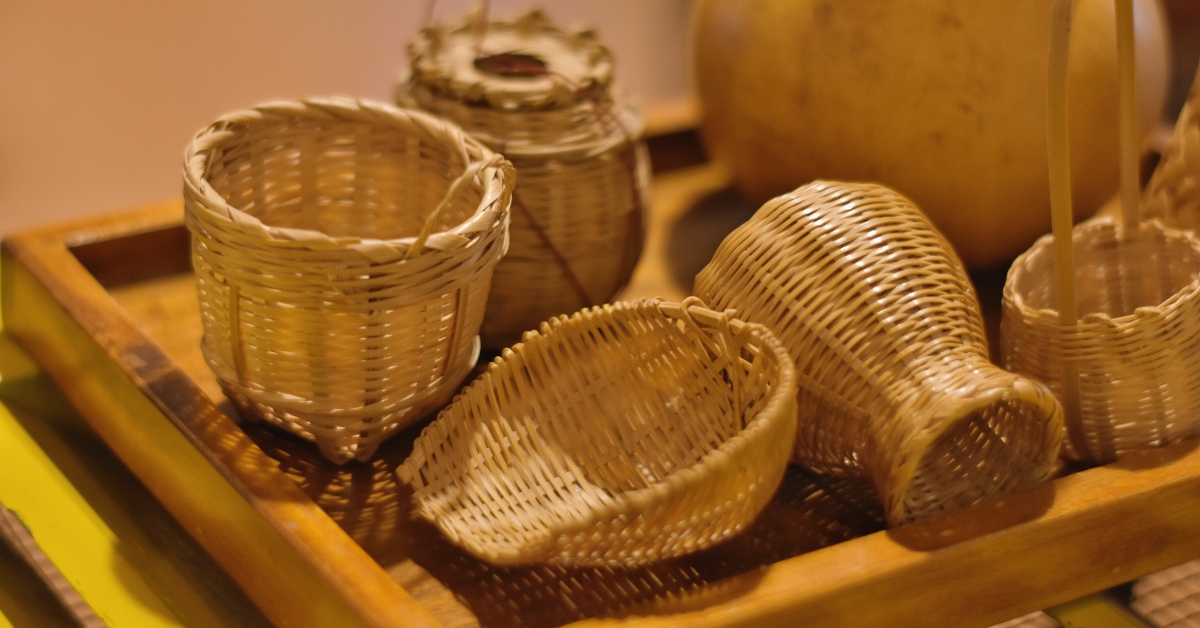
Dubai’s real estate and hospitality boom feeds a constant appetite for distinctive interiors. Indian wooden furniture, brassware, marble inlay, carpets, and artisan decor hold a position mass production cannot copy: authenticity.
The historical problem in this category is that photographs never do handcrafted work justice, so deals died in email threads. Bharat Mart, covered in its own section below, is built to solve exactly this. Buyers from the GCC and Africa will be able to touch the product before ordering, which favours craft exporters more than any other category on this list.
6. Textiles, Garments, And Home Furnishings
Who this is for: manufacturers and bulk traders, especially in modest fashion and hospitality supply.
CEPA was deliberately designed to favour labour-intensive Indian industries, and textiles received direct tariff elimination.
Three sub-segments perform in Dubai. Ready-made garments for value retail. Abayas, kaftans, and modest fashion fabrics, a segment Indian suppliers are still underweight relative to demand. Moreover, hospitality furnishings such as bed linen and curtains, because Dubai hotels refurbish on relentless cycles.
7. Fresh Fruits And Vegetables
Who this is for: exporters near production zones with cold chain access and the stomach for rejection risk.
Onions, mangoes, bananas, pomegranates, okra, and green chillies move out of India daily. Proximity is the moat, since Indian produce reaches Dubai faster and fresher than most competing origins.
The unvarnished truth: perishables carry the highest dispute risk on this list. Port-side rejection to renegotiate price is a known tactic with fresh produce, and an inexperienced exporter absorbs the loss. Start with hardy produce, use an experienced freight forwarder, insist on clear quality-acceptance terms in writing, and treat your first three shipments as paid education.
8. Engineering Goods And Building Materials
Whom this is for: manufacturers producing to international specifications.
Pumps, valves, pipes, fittings, fasteners, tiles, and sanitaryware. Unglamorous, and that is the advantage. These products win on specification compliance and delivery reliability, and buyers change suppliers rarely once trust is earned.
Gulf construction spending remains strong, and re-export demand into Africa flows through Dubai. The steadiest order books on this list live here, but only for exporters whose quality documentation survives scrutiny.
9. Electrical Machinery And Electronics
Whom this is for: established manufacturers with certifications in hand.
This is one of the fastest-growing Indian export categories to the UAE since CEPA came into force. Wires, cables, switchgear, fans, and small appliances move in serious volume, pulled by the construction pipeline across the UAE and Saudi Arabia.
The opening in 2026: buyers actively want supply chain diversification away from single-country dependence, and Indian manufacturers with conformity certifications are winning lines that were previously locked. Certification is the gate. Without it, do not quote.
10. Pharmaceuticals And Generic Medicines
Whom this is for: licensed pharma companies only. This is a marathon category.
The UAE healthcare sector keeps expanding, and India’s reputation as the pharmacy of the world carries genuine weight with Gulf procurement. Generics, APIs, and medical devices all have room.
The barrier is real: product registration with the UAE Ministry of Health and Prevention takes serious time and money per product. The reward is equally real, since registered suppliers tend to win large, repeating contracts. Enter only with capital reserves and regulatory patience.
11. Gems And Jewellery
Who this is for: established jewellers and manufacturers with hallmarking discipline and trade finance.
The largest and fastest-growing category by value, and the biggest single CEPA winner, with tariff elimination on gold ornaments, diamonds, and silver jewellery, subject to quotas on certain lines. Dubai is a global jewellery trading hub, and the wholesale volume dwarfs what the Gold Souk shows tourists.
It sits last on this list for one reason: capital intensity, compliance burden, insurance, and quota paperwork make it the least accessible category for a new exporter. If you are established in this trade, you already know Dubai matters. If you are not, do not start here.
Bharat Mart: What It Actually Means For You
Bharat Mart deserves more than a passing mention, because it is the single biggest structural change to India-Dubai trade infrastructure this decade.
The facts: 2.7 million square feet in Jebel Ali Free Zone, built by DP World, with 1,500 showrooms, more than 700,000 square feet of warehousing, and a dedicated zone for women-led Indian businesses. Phase one covers 1.3 million square feet, and doors open by the end of 2026. The site sits 11 kilometres from Jebel Ali Port and 15 kilometres from Al Maktoum International Airport, with Etihad Rail access, connecting exporters to more than 150 sea routes and 300 cities by air.
The honest cost-benefit view, because the promotional coverage will not give you one.
The case for moving early: showroom presence solves the touch-and-see problem for handicrafts, textiles, sports goods, and consumer products, and early tenants build buyer relationships before the facility saturates. For an SME, a showroom in Bharat Mart is a fraction of the cost of independently setting up retail presence in Dubai.
The case for waiting: Bharat Mart is modelled on Dragon Mart, and Dragon Mart’s economics historically favoured high-volume traders over small brands. A showroom is rent, staffing, and inventory commitment in a foreign country. If your annual export volume cannot absorb that overhead, exhibiting at trade fairs and supplying established Dubai distributors remains the saner first step.
Our read: watch phase one occupancy through early 2027, but start building your Dubai buyer relationships now, because the exporters with existing relationships will extract the most value from the hub whenever they do enter it.
Trivia: The Precedent Four Kilometres Long
Dragon Mart, the Chinese trade hub Bharat Mart is modelled on, is the largest trading hub for Chinese products outside mainland China, and its main building stretches in a serpentine form over a kilometre long. It proved that one physical marketplace in Dubai can anchor an entire country’s export presence across the Middle East and Africa. India is now running the same play with 1,500 showrooms of its own.
How To Start: The Checklist With The Failure Points Included
- Get your Import Export Code from DGFT. Days, not months.
- Register on ICEGATE and obtain your AD Code from your bank.
- Identify your HS codes and check the CEPA tariff schedule for each product. Not all lines are duty-free, and some carry quotas.
- File a Certificate of Origin for every CEPA-eligible shipment, before shipment, not after. Applying after the goods have sailed is the most common and most expensive rookie error.
- Confirm who the importer of record is on the UAE side. If your buyer handles import clearance, get their trade licence details verified. If they expect you to handle it, you need a UAE-side arrangement before the container moves.
- For food products, ensure your items are registered in the Dubai Municipality food import system before shipping. Unregistered food products sit at the port while your buyer’s patience and your product’s shelf life both expire.
- Sort product-specific compliance: FSSAI for food, MOHAP registration for pharma, conformity certification for electricals, Halal where applicable.
- Start with one product, one buyer, one clean shipment. Scale after the third repeat order, not before.
The Risks Nobody Puts In The Headline
Dubai is accessible. It is not safe by default.
Fake buyer fraud is real. Fraudsters posing as Dubai importers extract samples, advance commissions, or fake inspection fees from eager Indian exporters. Verify every trade licence independently before sending anything of value.
Letter of credit discrepancy games exist. Some buyers weaponize minor documentation discrepancies to delay payment or force discounts. Get your documentation checked by someone who has done this before, every single time, until it is muscle memory.
Perishable rejection renegotiation, covered above, deserves repeating because it catches produce exporters every season.
Moreover, payment terms stretch. Budget working capital for terms longer than agreed, because agreed and actual are different currencies in trade.
None of this should stop you. All of it should shape how you start.
Final Word
The window is unusually good. Duties are eliminated on 97 percent of tariff lines, trade is above 100 billion dollars, and a 1,500-showroom Indian trade hub opens before the year ends.
Pick the one category on this list where your supply strength is genuine, note which tier of difficulty it sits in, and go deep rather than wide. The exporters who file their Certificates of Origin, verify their buyers, and build relationships in 2026 will be the ones collecting the compounding returns when everyone else discovers Dubai in 2027.
About Author