
Table Of Contents
Every few months, pulse importers search for the same answer: What is the current import duty on yellow peas in India?
The figure that appears in search results is frequently outdated by the time the page loads.
This is not a topic where memorizing a single percentage is useful.
The duty on yellow peas is one of the most frequently revised figures in Indian trade policy.
It has moved between zero and 50 percent within a few years.
This handbook provides something more practical than a snapshot rate.
It explains the single rule that consistently determines your cost, the two official documents that govern your shipment, and the underlying reasons the rate continues to change.
The One Rule That Always Holds
Your duty liability is normally determined by the bill of lading date, specifically the “shipped on board” date, and not the date the vessel arrives or the date you read this article.
Indian customs notifications are typically framed around the bill of lading date.
A consignment loaded a day before a new duty comes into effect can clear at the old rate.
A consignment loaded a day later will attract the new rate.
This single detail has determined whether a shipment has resulted in a profit or a loss on numerous shipments.
Before finalizing any booking, confirm which rate applies to your intended loading date.
What You Are Actually Importing
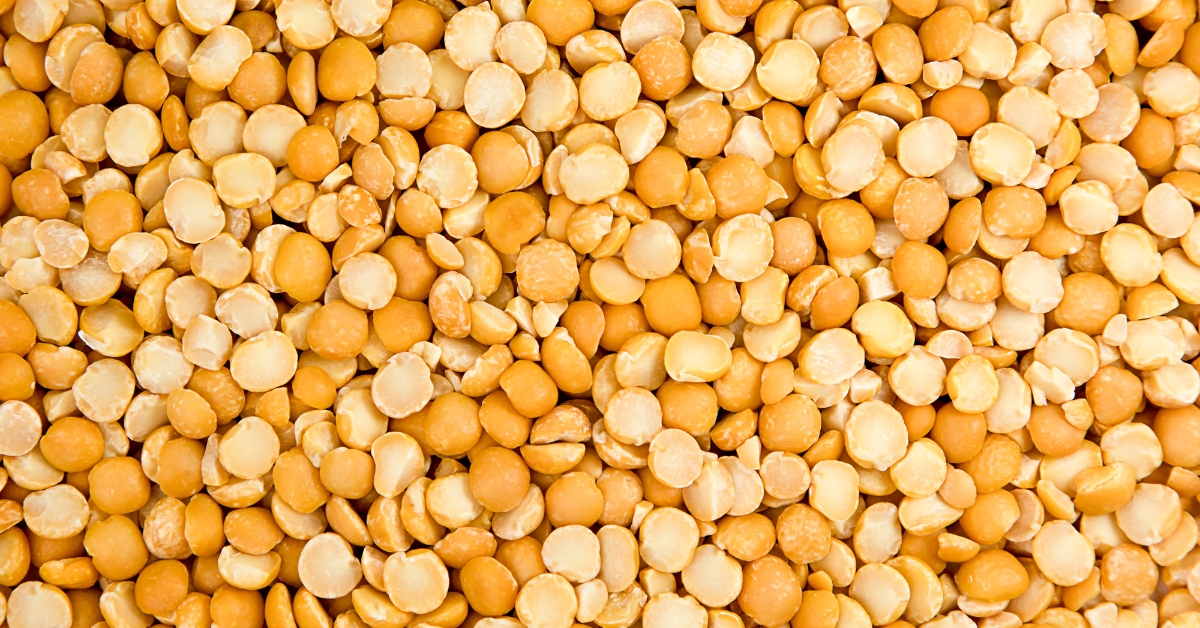
Yellow peas are a dried pulse commonly used in India as a lower-cost substitute for chana (chickpeas), particularly in besan and snack manufacturing.
India is the world’s largest importer of yellow peas.
Domestic production is minimal, and the country sources the bulk of its requirements from Canada and Russia.
In recent years, yellow peas have accounted for nearly half of India’s total pulse imports.
Because India is such a dominant buyer, any change in its import policy directly influences global prices.
Two Documents Decide Your Cost
Traders often look for a single answer.
In reality, two separate government bodies issue the rules that affect your landed cost.
- Import Policy: Issued by the Directorate General of Foreign Trade (DGFT). It determines whether yellow peas can be imported freely, whether any Minimum Import Price (MIP) applies, whether port restrictions exist, and whether registration under the Import Monitoring System is required.
- Customs Duty: Notified by the Ministry of Finance. It specifies the applicable rate, including basic duty and any cess.
These two can move independently.
Imports may remain “Free” under DGFT policy while still attracting duty, or duty may be reduced while registration requirements remain in place.
For all checks, use ITC (HS) Code 07131010.
This is the precise tariff line for yellow peas.
Using a broader code risks applying rules meant for a different pulse.
Current Status (June 2026)
As of June 2026, the position for yellow peas under ITC (HS) Code 07131010 is as follows:
- Import Policy: “Free” — No Minimum Import Price and no port restrictions. The Free import window has been extended until 31 March 2027, subject to registration under the Yellow Peas Import Monitoring System.
- Customs Duty: 30% total (10% Basic Customs Duty + 20% Agriculture Infrastructure and Development Cess). This duty has been in effect since 1 November 2025 for shipments with a bill of lading dated on or after that day and remains applicable.
Traders should verify both the latest DGFT notification and the relevant customs notification before every shipment, as either can change with little notice.
Why The Rate Keeps Moving
Policy changes reflect the government’s attempt to balance two opposing interests.
Consumers benefit from lower import duties because cheaper yellow peas help moderate pulse retail prices and contain food inflation.
When retail prices rise, pressure builds to reduce or remove the duty.
Farmers face the opposite pressure.
Large volumes of cheap imports can push domestic prices below the Minimum Support Price, squeezing grower incomes.
When this occurs, the government typically faces demands to raise the duty.
The agricultural calendar adds urgency.
Major decisions are often timed around the rabi sowing and harvest seasons, when the government seeks to stabilize prices for both producers and consumers.
The Swings, As Proof
A review of recent policy moves shows why no single rate remains stable for long.
The pattern is clear: the government adjusts the lever in whichever direction the greater pressure exists at the time.
A Trader’s Working Routine
Before every shipment, follow this short discipline:
- Check the latest DGFT notification for the current import policy status of ITC (HS) Code 07131010.
- Check the latest Ministry of Finance / Customs notification for the applicable duty rate.
- Match both against your planned bill of lading date.
- Treat any ministerial statement or media report as a signal only. The binding rule is the published notification.
- Include a duty-variation clause in your purchase contract that clearly states who bears the cost if the rate changes between order and shipment.
- When the value at stake is significant, obtain confirmation from a licensed customs broker before the vessel sails.
Trivia Worth Keeping
Yellow peas are widely used as a cost-effective substitute for chana in besan and savory snack production. Consequently, any change in import duty directly affects the cost structure of a large segment of India’s organized and unorganized snack industry.
The Takeaway
Do not attempt to memorize the current import duty on yellow peas.
Instead, internalize the process for finding and applying it.
Always verify the latest import policy and customs duty notifications, align them with your bill of lading date, and structure your contracts to accommodate future changes.
This habit will remain valid long after any individual rate has been revised.
Bookmark this page and revisit both official sources before finalizing your next booking.
About Author